Some Known Details About Nutritional Tips For Healthy Pets: Dogs, Cats, And Exotics

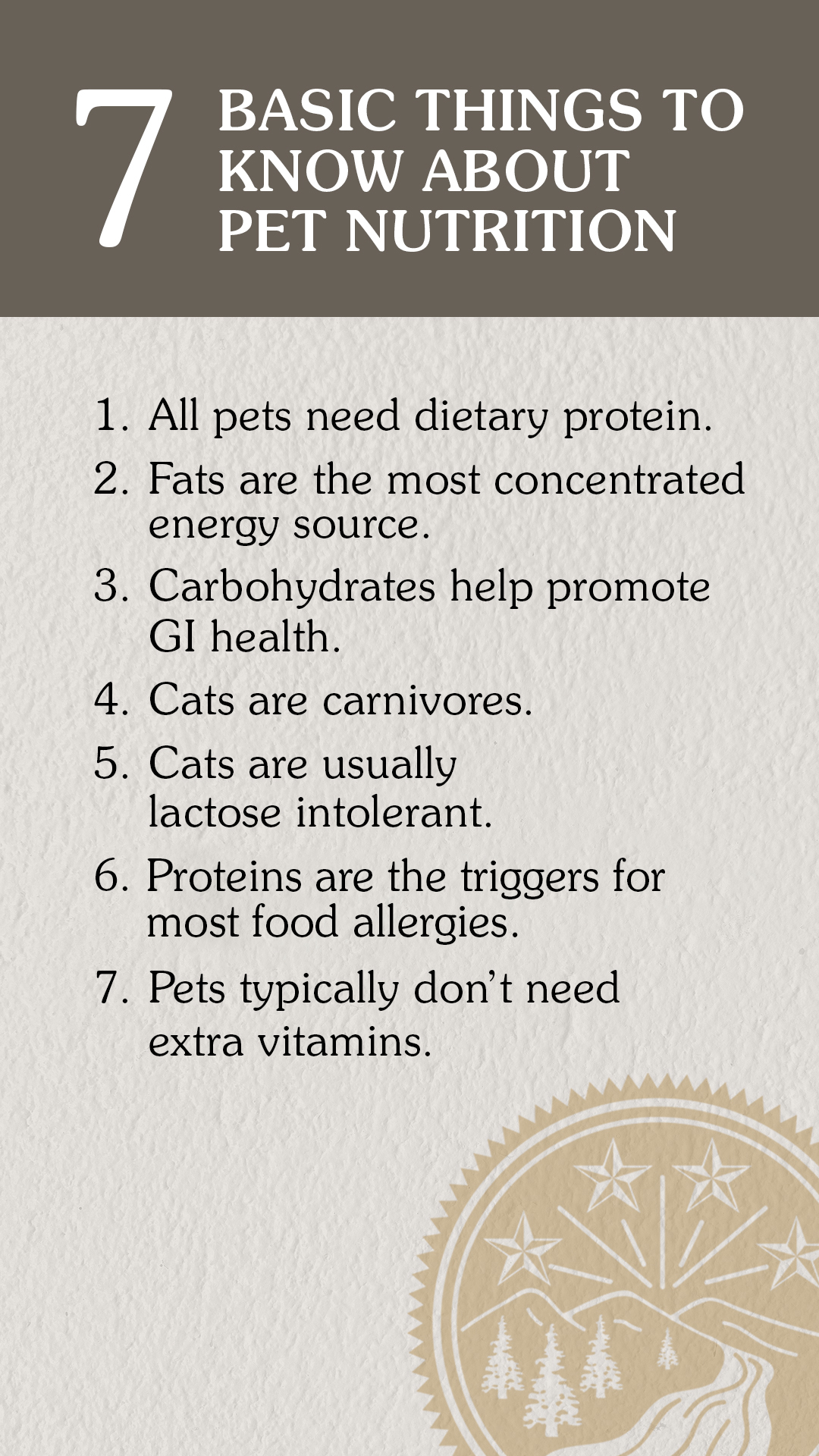
Fats are the most focused kind of food energy, giving your family pet with greater than twice the energy of healthy proteins or carbs. Fats are crucial in the framework of cells, required for the production of some hormonal agents, and are needed for absorption and usage of certain vitamins. Fats likewise supply insulation and protection for interior body organs.
Carbohydrates supply power, play a crucial function in the health of the intestinal tract, and are very important for recreation. While there is no minimal carbohydrate need, there is a minimum glucose requirement needed to provide power to vital body organs such as the mind. Fibers are sort of carbs that change the bacterial populace in the little intestine, which can aid manage chronic looseness of the bowels in pets.
Pet Nutrition: Key Tips For Feeding Cats And Dogs Things To Know Before You Get This
The majority of vitamins can not be synthesized in the body, and therefore are vital to obtain in the diet. Please note that when feeding your pet a full and balanced diet, it is unnecessary to offer a vitamin supplement unless a certain vitamin deficiency is diagnosed by a veterinarian. Because of over supplementation, poisoning because of excess vitamins (hypervitaminosis) is more usual nowadays than vitamin deficiency (hypovitaminosis).

Excess vitamin D might lead to really dense bones, soft tissue calcification and kidney failure. Minerals are nutrients that can not be synthesized by animals and need to be given in the diet. As a whole, minerals are most vital as structural constituents of bones and teeth, for keeping fluid balance and for their participation in several metabolic reactions.
6 Easy Facts About 7 Healthy Human Foods For Dogs - Petplace.com Shown
This procedure of slowly minimizing a pup's dependence on his mom's milk, called weaning, ought to typically start in between 3 and four weeks of age and is preferably completely by the time the young puppy is 7 to eight weeks. Puppies get full nutrition from their mommy's milk for the very first four weeks of life, so there is no need to feed them anything throughout that time.
If you find on your own in this situation, call your veterinarian for product and feeding referrals. After that time, it's finest to allow discouraging be a progressive process that occurs over a number of weeks. This allows the mom pet to slowly run out her milk supply and puppies require time to discover essential actions from their mom and littermates, including just how to analyze indications of dominance, inhibit their own biting practices and submit to even more dominant dogs.
While divided, introduce the puppies to consuming from a pan. The quantity of food, the frequency and size of splitting up can slowly be boosted.
A pampered lap pet dog might require just 10% of that, while an energetic pet that exercises consistently outdoors might call for upkeep plus 20 to 40%. You might need to readjust sections as you learn your pet dog's ideal "upkeep" amount. Pet dog proprietors should always speak with their canine's vet to establish the most effective feeding timetable and kinds of foods for their animals.
Little Known Questions About Pets Aren't People: Diet Trends Can Put Animals' Health At Risk.
Make certain to get in touch with your vet on your pet dog's post-opt dietary requirements. Rewards ought to be given up small amounts and stand for 5 percent or much less of the pet dog's everyday food intake. The rest needs to come from a nutritionally complete pet food. When making use of deals with as motivation, such as during training workouts, use the tiniest pieces you can.
Need Professional Tree Surgery Services?
Our certified arborists are ready to help with all your tree care needs. Get expert advice and a free consultation today.
Request Free Quote